Carlo Rizzi
The GodfatherCarlo Rizzi is a marginal outsider who marries into the Corleone Family believing that marriage will make him powerful, wealthy, and secure. Instead, he receives limited protection and a small bookmaker’s operation while remaining excluded from the family’s inner circle. His response is to turn his wounded ambition against Constanzia Corleone, and his private brutality becomes inseparable from the public violence that eventually destroys him.
Identity and Introduction
Carlo Rizzi is the son of a Sicilian father and a North Italian mother, a background reflected in his blond hair and blue eyes. His parents live in Nevada, and he leaves the state after a minor legal difficulty involving a gun. Don Vito Corleone sends trusted men to investigate him before accepting the marriage, and their report describes the offense as youthful indiscretion rather than serious criminality. The inquiry also produces detailed information about legal gambling in Nevada, which interests Don Vito Corleone and demonstrates how even a prospective son-in-law can become a source of useful intelligence.
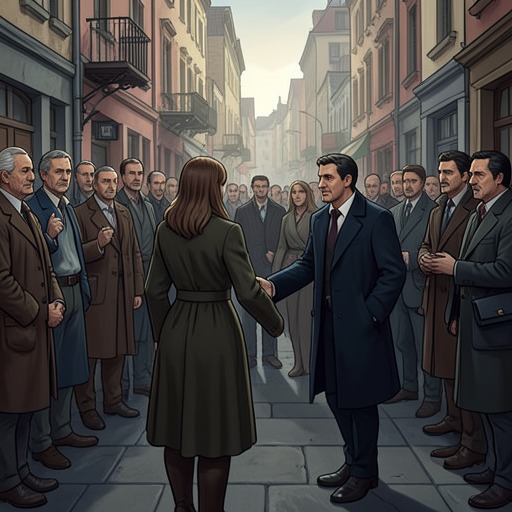
At Constanzia Corleone’s wedding, Carlo appears physically imposing and socially polished. His labor in the open desert has given him powerful forearms and broad shoulders, and he behaves with elaborate courtesy toward his bride. Yet his attention repeatedly returns to the silk purse containing the wedding gifts. The purse eventually holds more than twenty thousand dollars, and Carlo’s interest in it exposes the calculation beneath his charm: he regards the marriage as entry into a royal family and expects the family to provide for him.
Marriage and Abuse
Carlo’s first triumph is also the beginning of his real confinement. He has married Constanzia Corleone, but he has not become one of the men who direct the family’s affairs. On the wedding night, he takes possession of the money in her gift purse; when she resists surrendering it, he blackens one of her eyes. The scene establishes the governing pattern of their marriage. Carlo can perform the role of attentive bridegroom, but he treats his wife’s body and property as things to which he is entitled.
Five months later, Carlo is openly contemptuous of Constanzia. He watches her pour his coffee, insults her body, and takes pleasure in the tears his words provoke. Marriage to a daughter of Don Vito Corleone becomes, in his mind, a license to make her a doormat. His sense of masculine power depends not on achievement within the family but on domination inside the home, where he assumes that the family name will protect him from consequences.
Carlo also resents the modest position assigned to him. He expects a house in the Long Beach mall and a place close to the family’s operations, but Don Vito Corleone gives him only a small bookmaker’s business on the Upper East Side of Manhattan. Carlo interprets this restraint as humiliation. He scorns the old Don as a diminished, old-fashioned criminal and hopes that Don Vito Corleone will die, while imagining that Santino Corleone’s succession might finally give him the advancement he wants.
Conflict with Santino Corleone
Carlo’s abuse of Constanzia repeatedly activates the family’s protective structure. When he strikes her, Santino Corleone drives to the candy store where Carlo is sitting and attacks him with overwhelming force. Carlo clings to the iron railing of the stoop, offers no resistance, and is beaten while bystanders and even Santino Corleone’s bodyguards remain too frightened to intervene. The public assault reverses Carlo’s household authority: the man who terrorizes his pregnant wife becomes a cowering figure before her brother.
The beating does not reform Carlo. It changes his tactics. He becomes afraid to strike Constanzia again, but he retaliates through sexual withdrawal, drink, and contempt. As the war between the Corleone Family and the allied Five Families damages revenue, the bookmaker’s operation assigned to Carlo is among those closed. Carlo responds by running with chorus girls and drinking, while humiliating Constanzia with deliberate cruelty. His taunts turn the marriage into a calculated punishment, allowing him to injure her while avoiding the direct violence that might bring Santino Corleone back upon him.
Carlo’s fear of Santino Corleone is therefore mixed with envy. He recognizes that Santino Corleone can kill with instinctive ease, whereas Carlo would need to summon all his courage to commit murder. Rather than reject that violence, Carlo admires it as a form of power he lacks. The relationship between the two men becomes a contest in which Carlo cannot win openly, so he seeks an indirect weapon.
Betrayal and Consequences
Carlo’s opportunity comes through the family’s vulnerability to information. His resentment toward Santino Corleone, his desire for revenge, and his need to recover a sense of control converge in a betrayal that makes him useful to the family’s enemies. The resulting chain of violence leads to Santino Corleone’s death. Carlo’s importance to that killing is not that he possesses the strength to defeat Santino Corleone himself, but that his position inside the family gives him access to the domestic circumstances that make an ambush possible.
The wider war makes the betrayal especially consequential. The police pressure following the murder of Captain McCluskey damages both sides, while raids and lost gambling revenue force the Corleone Family to sacrifice profitable operations. Don Vito Corleone eventually renounces vengeance for his dead son in the interest of peace, declaring that no one under his responsibility will be attacked without just cause and extreme provocation. Yet this public restraint does not erase the private debt created by Carlo’s role in Santino Corleone’s death. The family’s peace politics postpones retaliation; it does not cancel it.
Carlo’s marriage also reveals the distinction between the Corleone Family’s system of protection and genuine belonging. Don Vito Corleone can help outsiders, shelter loyal men’s families, arrange opportunities, and turn friendship into a binding debt. Carlo receives the benefits of that system but never accepts its discipline or earns its trust. He wants the privileges of kinship without the loyalty that makes those privileges possible. His violence toward Constanzia and his hostility toward Santino Corleone convert family access into an instrument of destruction.
Final Confrontation and Narrative Role
Near the end, Carlo waits nervously for an interview with Michael Corleone while noticing the arrivals and departures around him. He senses that something important is happening and is anxious not to be excluded, the same anxiety that has shaped his entire life within the family. He telephones Michael Corleone, receives instructions to wait, and then calls his mistress to promise that he will join her later. His attention remains fixed on arranging the next pleasure and preserving the appearance of an ordinary evening.
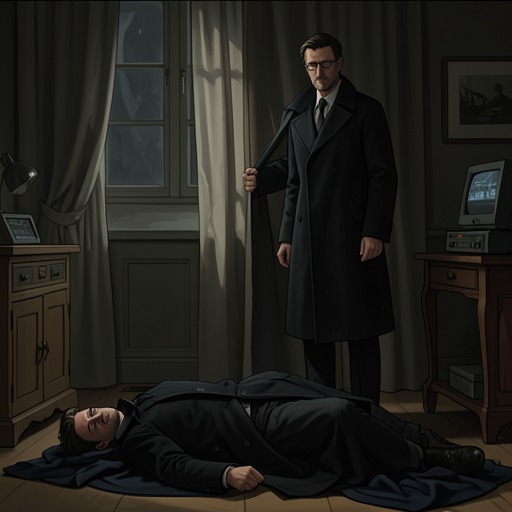
When a knock comes, Carlo assumes that Michael Corleone has sent someone to summon him. Instead, Michael Corleone stands at the door with Tom Hagen and Rocco Lampone. The visitors appear grave, and Carlo’s first shock becomes physical nausea when he sees Michael Corleone’s face as the face of the death that has haunted his dreams. Michael Corleone states the charge plainly: Carlo must answer for Santino Corleone.
Carlo’s arc is thus governed by a failed ambition. He enters the Corleone Family seeking status, finds himself excluded from its power, and attempts to compensate through control of his wife, resentment of Don Vito Corleone, and covert hostility toward Santino Corleone. The very family connection he treats as a shield becomes the evidence of his betrayal. In the world governed by Don Vito Corleone’s favors, layered command, and enforced silence, Carlo mistakes proximity for immunity. Michael Corleone’s confrontation exposes the final consequence: a man who wanted to live like a family insider is judged as an enemy from within.